













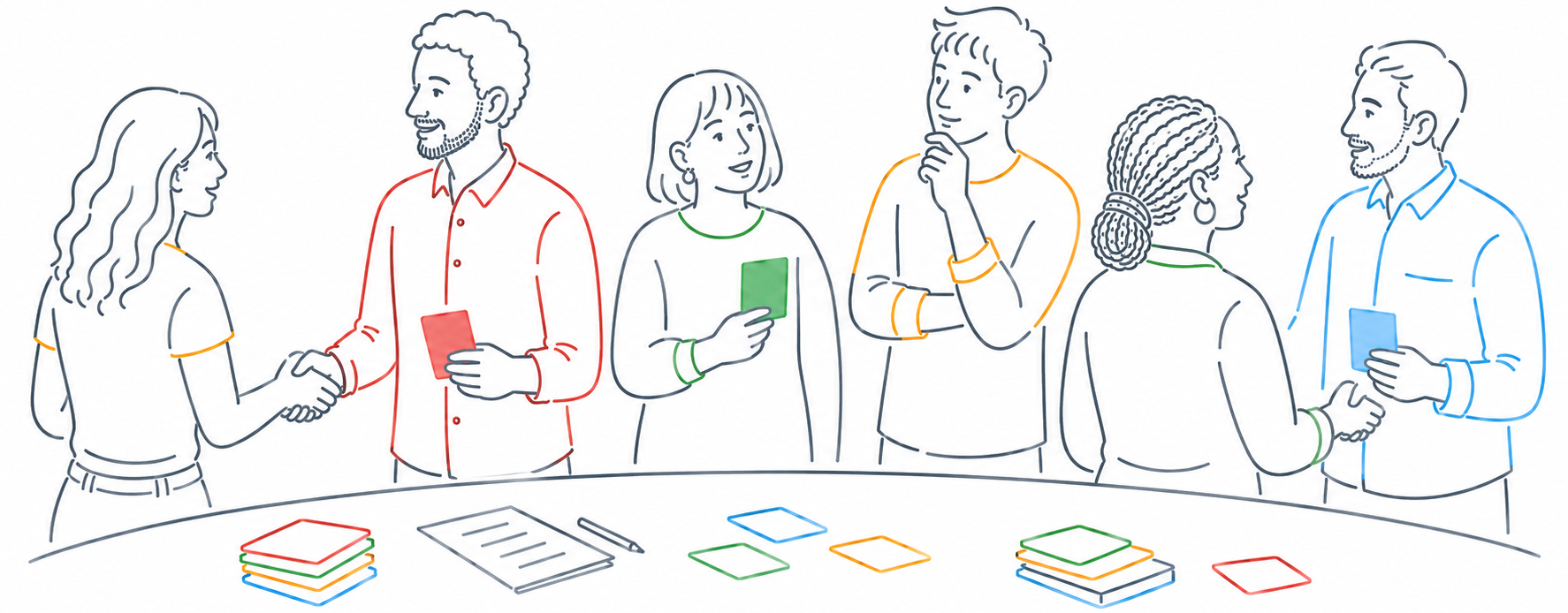
Bring the workshop to your group.
We’ll handle the rest.
Two hours, ideally fewer than 15 participants, a facilitator we connect you with — or one of your own staff.

Who can organise a workshop.
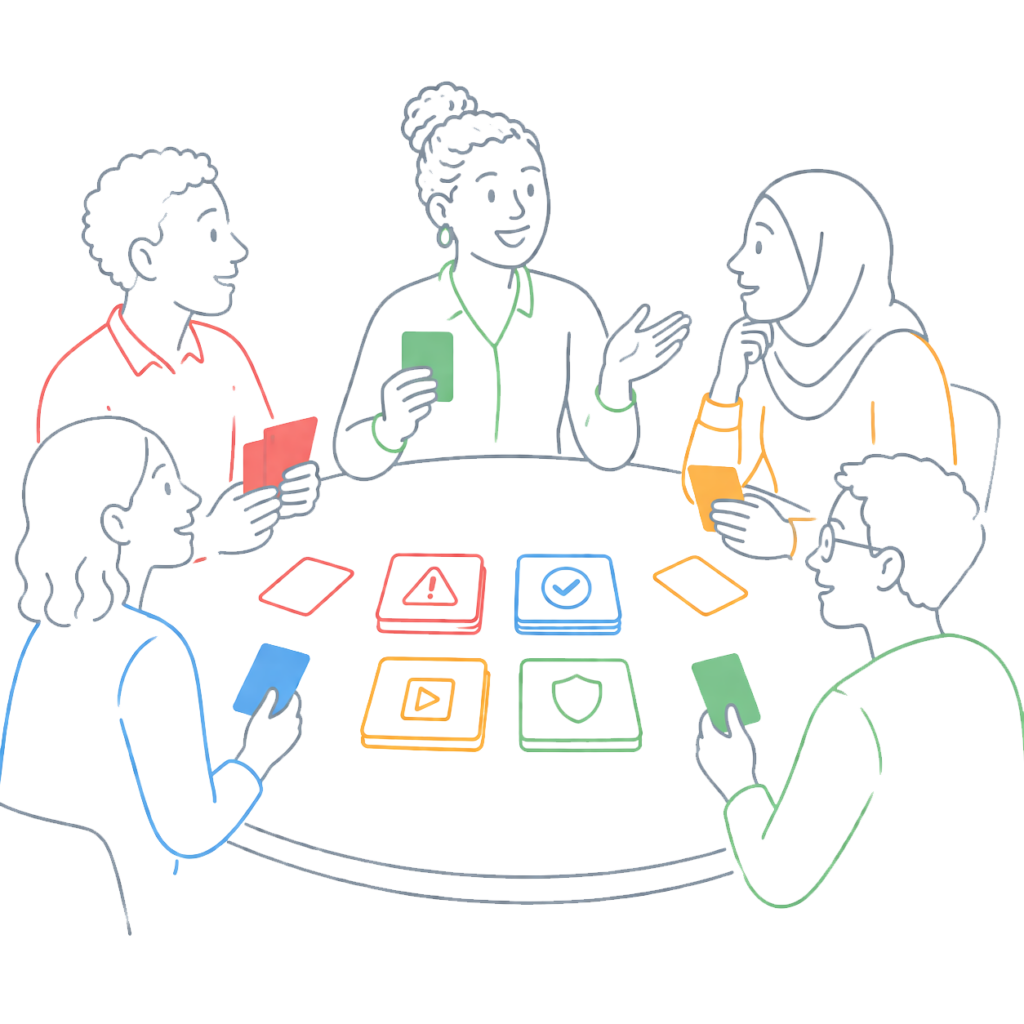
The workshop is regularly run for:
- Companies and institutions — leadership offsites, HR teams, employee social committees, ESG/CSR initiatives
- Schools and universities — staff training days, parent groups, residential life teams
- Healthcare and social services — hospital teams, mental health units, social services, NGOs
- Religious, cultural, and sports organisations — anywhere adults work around vulnerable people
- Community groups, family circles, neighbourhood associations
Anyone with a group of adults can organise a workshop. The format adapts to the context — what matters is the conversation that happens, not the décor of the room.

How it works.
1. Choose a facilitator and book the session
Browse our list of certified facilitators, contact one in your region and language, and agree on a date. They handle the rest — materials, coordination, and a written debrief afterwards.
Find a certified facilitator near you →
2. The session runs
A 2-hour workshop, in your space — office, classroom, conference room, community centre.

What you need to provide.
- A group: ideally fewer than 15 adult participants
- A room: with at least one table large enough for the cards
- Two hours of focused time, ideally without interruptions
- A contact person within your organisation to coordinate logistics
The workshop has no fixed price. The honorarium is negotiated directly with the facilitator and depends on:
- The country and region (cost of living varies enormously)
- The size of the group (one facilitator for fewer than 15; two for larger groups)
- The travel involved
- The type of organisation (we suggest discounted rates for schools, non-profits, and community groups)
For organisations that need recurring sessions (annual onboarding, repeated training cycles), it is often more economical to train one of your own staff as an internal facilitator — the book and the materials cost a few dozen euros, and the trained facilitator can run as many sessions as your organisation needs.

What participants say.
Free resources.

Before you commit, you can review the full card deck for free, in your language. See exactly what your group will be working with.
Other ways to engage.
You can run a workshop yourself
The full method is in the book. Read it, gather a few people, and host your first workshop in your city, your company, or your school.

Become a regional representative
Lead the project in your country or region. Build the local community.