









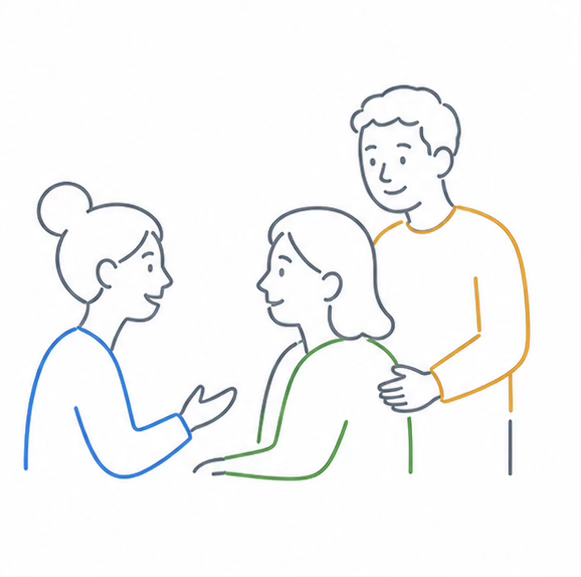
You already know how to care.
The workshop sharpens how you prevent.
A 2-hour workshop designed for clinicians, nurses, social workers, and frontline professionals.

Why this workshop is built for you.

You are not the typical audience. You may or may not have received formal training on sexual violence. Many professionals have not. Access to training varies between countries, professions, and institutions.
But through your work, you have encountered this issue. You have received disclosures. You have noticed warning signs. You have supported people affected by trauma. You may have helped them through legal procedures or supported them within institutions.
Our workshop is not designed to teach you the basics. It is designed to surface the assumptions everyone — including experienced professionals — carries unexamined.
The workshop does not replace your training. It complements it. It creates a structured discussion with colleagues about common misconceptions, social influences, and false beliefs that can affect how we listen and understand others.
2 hours.
Fits within a half-day team meeting or peer-supervision session.
Small groups.
Ideally fewer than 15 — perfectly matched to most clinical or social services team sizes.
Evidence-aligned.
Built on WHO, UNICEF, and peer-reviewed prevention research.

Settings where it works.
Public health teams
Community education, school nurse networks, occupational health
Social services
Child protection, family services, residential care, refugee support
Hospital teams
Emergency departments, paediatrics, OB-GYN, psychiatric units, addiction services
Mental health teams
Psychologists, psychiatrists, therapists, peer support workers
Primary care and community health centres
Frontline GPs and nurses who see early warning signs
Medical and nursing students
Toward the end of their studies, as preparation for the realities of practice
NGO and humanitarian workers
Particularly in contexts where sexual violence is prevalent and resources are scarce
Refugee and migration support
High-risk populations where prevention frameworks need to be culturally adapted

What experienced professionals find useful.
Re-examining your own intuitions
Some cards are deliberately ambiguous — designed to surface the snap judgements we all make, even after years of practice. The exercise is uncomfortable in the best way.
Aligning with colleagues
Different team members carry different mental models. The workshop creates a shared frame that reduces the small inconsistencies between practitioners that erode patient or service-user trust.
Working on the “fake good ideas”
Some interventions sound effective and aren’t. The workshop trains you to recognise plausible-sounding solutions that lack evidence — useful both clinically and when advising patients, families, or institutions.
Recognising prevention windows
Many disclosures come after years of warning signs that were missed not for lack of skill, but for lack of frame. The workshop helps you spot patterns — in patients, families, institutions — before they escalate into harm.

What participants say
Free resources to evaluate the workshop.

Before commissioning a session for your team, download the full card deck for free and review the content. We trust your professional judgement to decide whether the workshop will add to your team’s practice. Browse the free card decks →
Hosting an actual workshop requires the full method — script, pedagogical guidance, facilitator notes — which is available in the book. Get the book →
Bring the workshop to your team.
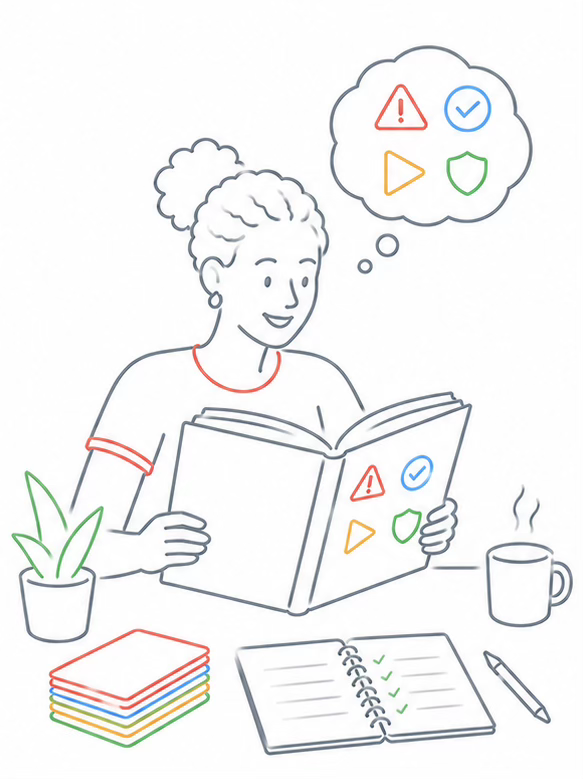
You can run a workshop yourself
The full method is in the book. Read it, gather a few people, and host your first workshop in your city, your company, or your school.
Become a regional representative
Lead the project in your country or region. Build the local community.