

When I designed the first version of the workshop in 2023, I had no idea it would be sitting at this scale three years later. We are launching the international edition of the Sexual Violence Prevention Workshop in 15 languages, with regional representatives in several countries, and a growing network of facilitators around the world. This piece is a quick stocktake — what we learned, what changed, and what comes next.
A short history
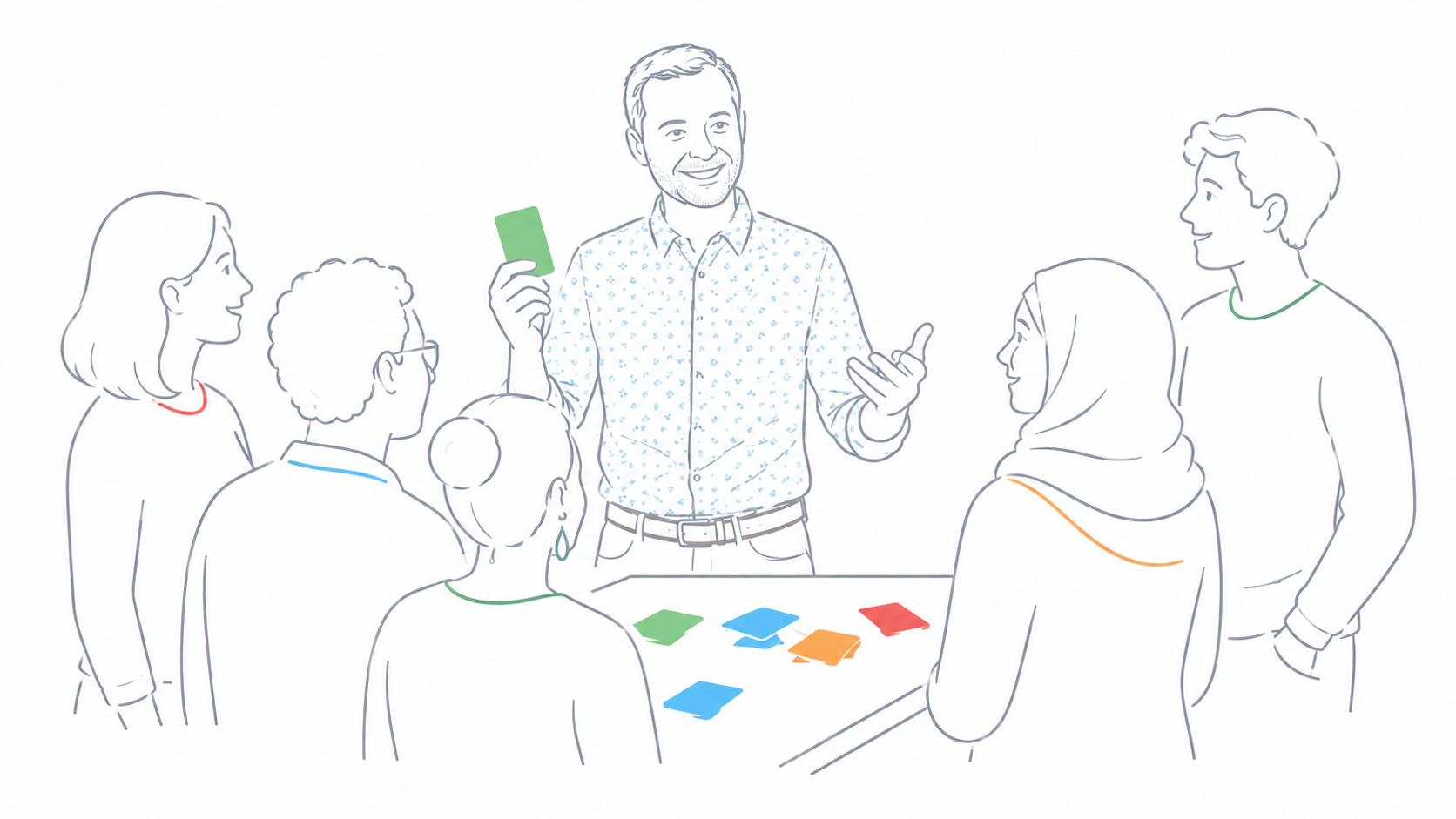
The first version of the workshop, La Fresque des Violences Sexistes et Sexuelles®, was launched in French in 2023 as a 3-hour collaborative format inspired by what works in collective intelligence pedagogy. It addressed an old frustration of mine: awareness campaigns inform without transforming. We don’t lack good intentions on this subject. We lack frames that adults can walk through together to actually think about it.
In its first two years, the French version ran in workplaces, schools, universities, healthcare teams, religious institutions, and community groups. The cards were downloaded thousands of times. People we had never met started running their own sessions, in their own circles, simply because the materials were freely available.
That gave us the answer to a question we had not formally asked: can this method travel?
It looked like it could. So in early 2025, we started the rebuild.
Why “rebuild” and not “translate”
A translation would have been the easy path. We did the harder one because some choices in the French version were specifically French. In Tokyo or Lagos or São Paulo, the same cards would have either confused or alienated their readers.
So the international edition rests on three structural changes:
A more culturally neutral vocabulary. Throughout the cards and the facilitator’s manual, we replaced country-specific examples with broader formulations. Where the French version cited a French law, the international version cites the principle the law expresses.
A genuinely multilingual production process. The 15 languages were not translated by one team and reviewed by another. Each language has at least one native-fluent reviewer with expertise in the subject. That took longer. It was the right call.
A facilitator’s manual rewritten with global facilitators in mind. The French facilitator’s notes assumed that the host had a baseline familiarity with French public discourse on these topics. The international version assumes much less and provides much more.
What 15 languages means in practice
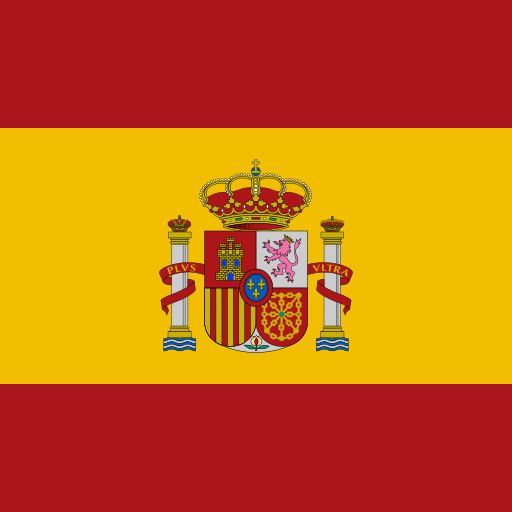
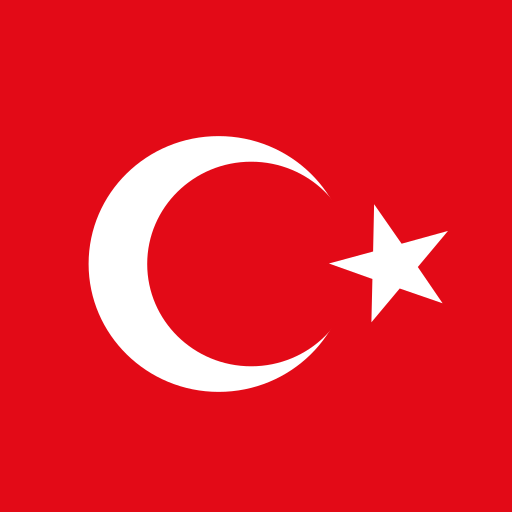
The 15 supported languages — Arabic, Chinese, Dutch, English, French, German, Hindi, Italian, Japanese, Korean, Polish, Portuguese, Russian, Spanish, and Turkish — were not chosen arbitrarily. They cover approximately 4 billion native and second-language speakers, which is close to half the world’s population. For comparison, English alone covers about 1.5 billion when including non-native speakers; the next 14 languages roughly double that reach.
New languages will be added when we have a team committed to maintaining them over time — not as one-off translation projects that decay.
The network
Beyond the materials, the workshop only exists because people choose to host it. If you’ve come this far and the project speaks to you, the Become a Regional Representative page is where I’d point you. The role is meaningful, the people involved are remarkable, and the work is one of the things that gives me real hope in the medium term.
What comes next in 2026
Three things, in rough order:
First, the Preventorium video series. The first long-form video will publish in September 2026 — short, evidence-based videos on the topics the cards cover. The aim is not to replace the workshop but to give curious visitors a way in, before they decide to attend or facilitate.
Second, the online facilitator training. Two formats — live videoconference cohorts and self-paced text-and-video modules — both designed to give new facilitators more confidence than the book alone can give. The book remains sufficient; the training is for those who want more guided support.
Third, the research collaboration. We are opening conversations with university research groups in a few countries to formalise the evaluation of the workshop’s effects. The method is built on existing science, but the workshop’s own effects deserve to be measured. I’ll write more about this when there is more to share.
How to take part
If you’ve read this far, the project has caught your attention. Here are the ways to engage:
Organize one for your team → · Become a facilitator → · Become a regional representative → · Donate →
And if none of those fit — or fit yet — sharing this page with one person in your network costs nothing and helps more than it sounds.
— Sébastien